If you’ve been asking yourself, “how to budget your money,” you’re not behind.
You’re right on time to build a system that finally feels clear and calm.
This guide is practical on purpose.
You’ll learn how to manage your budget, control spending, track your numbers, and save without feeling deprived.
How to budget your money (who it’s for and how to start today)
This plan is for you if you’ve ever thought, “i need to learn how to budget my money,” but didn’t know where to begin.
It’s also for you if your paycheck disappears fast, your bills feel unpredictable, or you want a simple structure you can repeat.
Budgeting is not about being perfect.
It’s about knowing what your money needs to do next, before it vanishes.
Who this budgeting system works best for
- People who want to learn how to manage your money without complex apps.
- Anyone trying to figure out how to better manage finances with a realistic routine.
- Busy adults who want fewer surprises and more confidence.
Step-by-step: your 20-minute setup
- Write down your monthly take-home income, using your most recent pay stubs.
- List your “must-pay” expenses, like rent, utilities, insurance, debt minimums, and transportation.
- Choose a weekly spending limit for flexible categories, like food, gas, and fun.
- Create one savings goal, even if it’s small, and name it clearly.
- Automate one move on payday, like a transfer to savings or a bill payment.
This is the best way to start how to budget your expenses without getting overwhelmed.
Small structure first, then small upgrades as you go.
How to get your budget under control when money feels chaotic
If you feel like you’re constantly reacting, you’re not alone.
Most people don’t need more discipline, they need a clearer order of operations.
To learn how to get your budget under control, you need two things.
A “bills-first” plan, and a spending boundary that protects the rest.
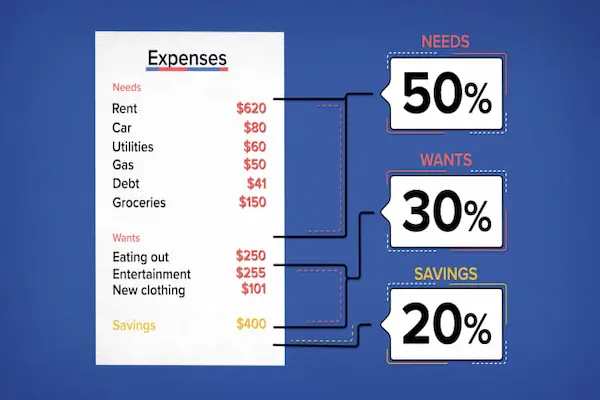
The 3-bucket method that makes budgets feel simpler
- Bills and essentials: fixed costs and minimum payments.
- Weekly spending: flexible life costs you control week by week.
- Future you: savings, emergency fund, and long-term goals.
When you see your money in buckets, decisions get easier.
And easier decisions are the fastest path to stability.
How to get spending under control without feeling restricted
If your biggest problem is day-to-day spending, the fix is not shame.
The fix is a simple weekly number and a quick weekly check-in.
This is how to get spending under control in real life, even with a busy schedule.
And if you’re thinking “how to get my spending under control,” start with one week, not forever.
A weekly routine that actually sticks
- Pick a weekly amount for your flexible spending categories.
- Track spending once per day, or once every two days, in under two minutes.
- Do a five-minute review every Sunday, and adjust the next week’s number.
The goal isn’t to never spend money.
The goal is to spend on purpose, and stop accidental overspending.
Best “friction” tactics to stop impulse spending
- Wait 24 hours before buying non-essentials online.
- Unsave your card from shopping sites to add one extra step.
- Keep a short “buy later” list so you don’t feel deprived.
These small moves are how to manage money better and save without burning out.
You’re building a lifestyle, not a temporary sprint.
How to manage your bills and money so nothing slips through
Bills feel stressful when they’re unpredictable or scattered.
Learning how to manage your bills and money starts by choosing one “money day” and one simple system.
Step-by-step: a bills system that reduces anxiety
- List every bill, its due date, and the typical amount.
- Switch due dates if possible so most bills land in the same window.
- Automate minimum payments to avoid late fees and credit damage.
- Keep a small buffer in checking to protect you from timing mistakes.
This approach is the best way to manage your money when life is busy.
It protects your essentials first, and gives you breathing room for everything else.
How to keep track of finances in Excel without making it complicated
If you like clarity and control, spreadsheets can be powerful.
This is how to keep track of finances in excel with a simple layout that takes minutes a week.
You don’t need advanced formulas to win here.
You just need consistency, and a sheet that answers the questions you actually care about.
How to track your finances in excel with one clean table
- Date: when the money moved.
- Description: groceries, rent, paycheck, gas, etc.
- Category: bills, weekly spending, savings, debt.
- Amount: positive for income, negative for spending.
- Notes: optional, like “one-time expense” or “planned.”
Then add a simple monthly summary.
Total income, total bills, total weekly spending, total savings, and total debt payments.
A quick weekly spreadsheet routine
- Update the sheet once per week, using your bank transactions.
- Compare weekly spending to your weekly limit, and adjust next week if needed.
- Celebrate one win, like “I stayed under my limit” or “I saved $25.”
This method is how to budget your money while staying realistic and organized.
It also shows you patterns that apps can hide behind charts.
Learn how to manage your money with habits that compound
If you’re wondering “how can i manage my money better,” the answer is usually habits plus a plan.
Not motivation, not guilt, and not random bursts of intensity.
When you learn how to manage your money, you’re really learning how to manage decisions.
And decisions get easier when you build supportive defaults.
Daily and weekly habits that create fast momentum
- Check balances on a schedule, not constantly, to reduce stress.
- Plan one “no-spend” day each week to reset and create extra margin.
- Move money to savings first, even if it’s a small amount.
These are personal, practical answers to “how do i manage my money better.”
Small moves, repeated, become big results.
How to manage my money better when my income feels tight
Start by shrinking the number of categories you track.
Fewer categories means fewer decisions, and fewer decisions means you’re more likely to stay consistent.
Then focus on one improvement at a time.
That might be lowering one recurring bill, cooking two extra meals at home, or paying an extra $20 toward debt.
This is how to manage your money better without feeling like your life is on pause.
Progress should feel sustainable.
How to budget your expenses when you are broke (without giving up)
If you’re in a season where money is extremely tight, your budget needs to be survival-focused.
Learning how to budget when you are broke is about protecting essentials and preventing new financial damage.
The priority order that keeps you stable
- Housing and basic utilities.
- Food and essential transportation.
- Minimum debt payments to avoid penalties when possible.
- Any medical or critical needs.
- Even a tiny emergency buffer if you can manage it.
In this phase, budgeting is about stability first.
And stability creates the space to grow.
Low-cost strategies that still work
- Plan meals for the week before shopping to reduce food waste.
- Call providers to ask about hardship programs or cheaper plans.
- Pause non-essential subscriptions for a set time, then reassess.
If you’ve been thinking “how to budget your expenses” and you feel discouraged, keep it simple.
One good week can turn into a good month faster than you think.
How to manage your budget long-term so it doesn’t fall apart
A budget fails when it’s treated like a one-time event instead of a living system.
So how to manage your budget for the long run starts with a repeatable review.
If you’ve asked “how do you manage your budget,” here’s the truth.
Most people manage it with small check-ins, not big overhauls.
Monthly review: the five questions to ask
- What did I do well this month that I should repeat?
- What surprised me, and how can I plan for it next month?
- Did my weekly spending limit match real life?
- What is one expense I can reduce without suffering?
- What is one goal I want to fund next?
This is also how to manage my budget without feeling like I’m constantly “starting over.”
You adjust, you learn, and you keep moving.
Make your budget feel human
- Include fun money, even if it’s small, so the plan is livable.
- Plan for irregular costs by saving a little each month.
- Keep a buffer category for surprises, because life is not a spreadsheet.
When your budget feels human, you’ll actually use it.
And that’s the real best way to manage your money.
Final takeaway: choose one move today and build confidence fast
If your head is full of ideas, pick one action and do it today.
Action creates clarity, and clarity creates momentum.
- Set a weekly spending limit and test it for seven days.
- Create a simple Excel tracker if you want visibility fast.
- Automate one bill payment or one savings transfer on payday.
If you’re still thinking “how to manage my money better,” start with the smallest step you can repeat.
That’s how to budget your money in a way that lasts.
This content is educational and independent, and we have no relationship, control, or responsibility over any third-party institutions, platforms, or services mentioned.
For personalized guidance, consider consulting a qualified professional who can evaluate your full financial situation.