If you searched Lifeline eligibility because you want a fast, clear answer, here it is.
In 2026, you generally qualify in one of two ways: your household income is at or below 135% of the Federal Poverty Guidelines, or you participate in a Lifeline qualifying program.
Once you know which path you fit, the fastest next step is using the Lifeline National Verifier, which is the centralized system that confirms eligibility.
You may see people call it the National Lifeline Eligibility Verifier, the National Lifeline Verifier, the Lifeline Verifier, or even “National Verifier Lifeline.”
They are typically referring to the same core thing: the National Verifier used to check your application details and determine if you qualify.
Notice: This content is independent and informational only.
We are not affiliated with, sponsored by, partnered with, or in control of the FCC, USAC, the National Verifier, LifelineSupport.org, GetInternet.gov, or any Lifeline provider mentioned.
Eligibility rules and acceptable documents can change, so always confirm details using official Lifeline guidance before you apply.
Lifeline eligibility: who qualifies in 2026
You qualify for Lifeline eligibility if you meet one of these categories.
You do not need both, and trying to prove both can slow you down if you upload unnecessary documents.
Your best move is to pick the strongest method and submit clean proof for that method.
- Income-based: Your gross annual household income is at or below 135% of the Federal Poverty Guidelines.
- Program-based: You or someone in your household participates in a qualifying assistance program.
That is the backbone of Lifeline program eligibility, and it stays simple on purpose.
What gets confusing is the “how,” especially when you want approval fast and you do not want the application to bounce back for corrections.
FCC Lifeline eligibility basics you should know first
Before you apply, you need to understand one rule that trips people up.
Lifeline is generally limited to one benefit per household, not one per person.
A household is typically defined as people at the same address who share income and expenses.
If someone at your address already has Lifeline, your application may still be possible, but you could be asked to prove you are a separate household.
That often means completing the Lifeline Household Worksheet if instructed during the process.
This is normal in multi-family homes, shelters, group living situations, and places where addresses are shared on paper but finances are separate in real life.
Fast clarity: “Same address” does not always mean “same household,” but you may need to document the difference if the system flags it.
Lifeline qualifying programs that can make you eligible
If program participation is your easiest path, you want to choose it because it can be the quickest to verify.
Many applicants are approved through database checks when their enrollment is active and correctly matched.
That is why understanding Lifeline qualifying programs is such a time-saver.
You may qualify if you or someone in your household participates in programs like these.
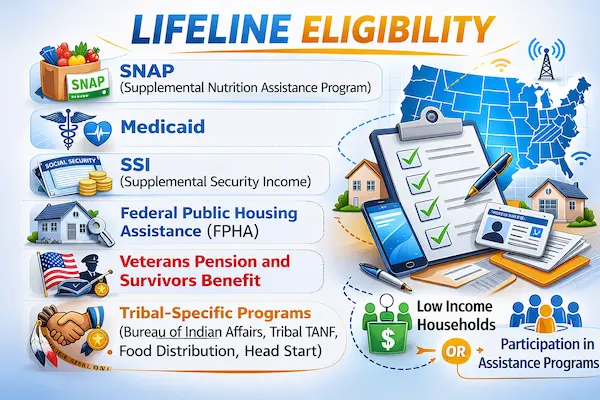
- SNAP (Supplemental Nutrition Assistance Program).
- Medicaid.
- SSI (Supplemental Security Income).
- Federal Public Housing Assistance (FPHA).
- Veterans Pension and Survivors Benefit.
If you live on Tribal lands, there are also additional Tribal-specific program options in official guidance.
Common examples include Bureau of Indian Affairs General Assistance, Tribal TANF, Food Distribution Program on Indian Reservations, and certain Head Start situations tied to income qualifying standards.
That detail matters because Tribal eligibility can expand your options while still following the same “prove it clearly” rule.
Here is the mindset that keeps this easy.
Your proof should show your name, the program name, and evidence that participation is current.
If one of those is missing, pick a different page from your benefits letter or portal that includes all three.
Lifeline income limits for 2026
If you are not using program participation, you can still meet Lifeline income eligibility by staying within the income thresholds.
In 2026, the Lifeline income standard is generally based on 135% of the Federal Poverty Guidelines.
That is why people search for Lifeline income limits so often, because the numbers feel like the “real answer” they can measure themselves against.
Use the table below for the 48 contiguous states, D.C., and U.S. territories listed in Lifeline guidance.
Then check Alaska and Hawaii separately, because the thresholds are higher there.
| Household Size | 48 States, D.C., & Territories (135% FPG) | Alaska (135% FPG) | Hawaii (135% FPG) |
|---|---|---|---|
| 1 | $21,546 | $26,933 | $24,786 |
| 2 | $29,214 | $36,518 | $33,602 |
| 3 | $36,882 | $46,103 | $42,417 |
| 4 | $44,550 | $55,688 | $51,233 |
| 5 | $52,218 | $65,273 | $60,048 |
| 6 | $59,886 | $74,858 | $68,864 |
| 7 | $67,554 | $84,443 | $77,679 |
| 8 | $75,222 | $94,028 | $86,495 |
| Each additional person | +$7,668 | +$9,585 | +$8,816 |
If you are close to the line, do not guess.
Calculate your gross household income using the method described in official Lifeline guidance, then choose the cleanest proof you can submit.
This is where a simple, complete tax return can save you a lot of back-and-forth.
Lifeline eligibility check: how to verify fast using the National Verifier
The fastest way to check Lifeline eligibility is through the National Verifier online portal.
This is exactly why people search for Lifeline National Verifier and National Verifier Lifeline when they are ready to apply.
If the system can match you through government databases, you may get an eligibility decision quickly without needing to upload documents.
Here is a practical speed-focused workflow that keeps you moving.
- Start at the official application portal on GetInternet.gov or the consumer guidance site LifelineSupport.org.
- Enter your legal name, date of birth, and the requested identifier details, such as the last four digits of your SSN or a Tribal ID number where applicable.
- Select how you qualify, either through a program or income, and keep your proof ready in case it is requested.
- If you are asked for documents, upload clear images immediately rather than mailing, because that usually reduces total processing time.
- Once you receive an approval decision or an Application ID, you can take that to a participating provider to enroll.
There is one important exception you should know about right now.
Official guidance notes that some states have different workflows, and in certain cases consumers may be directed to state-specific processes.
If you see special instructions for your state during the application, follow the portal prompts exactly, because that is the fastest route for your location.
What “instant approval” really depends on
If you want the truth about speed, “instant approval” is not about luck.
It is about clean matching between your application and your records.
Most delays happen when your name, address formatting, or program enrollment details do not match what databases expect.
So if you want to help the system help you, focus on consistency.
Use your full legal name, include apartment numbers exactly as they appear on official mail, and avoid nicknames.
Then, if you need to upload documents, make sure every file is readable, complete, and shows the key details in one frame.
- Use clear photos: no glare, no blur, no cut-off corners, and all text visible.
- Match formatting: “Apt 4B” versus “#4B” can matter if your records use one format consistently.
- Submit one strong proof per category: identity, address, and eligibility, unless the portal asks for more.
This is how you avoid getting stuck in a loop of resubmissions that feels endless.
Survivor Benefit and Lifeline eligibility under the Safe Connections Act
If you are a survivor of domestic violence, human trafficking, or related crimes, there is a specific Lifeline pathway tied to the Safe Connections Act.
In official guidance, eligible survivors experiencing financial hardship may receive emergency Lifeline support for up to six months when they pursue a line separation request.
Survivors may also qualify through special criteria such as income at or below 200% of the Federal Poverty Guidelines or certain program participation options described in Lifeline materials.
This can matter because it changes how you think about eligibility when you need help quickly and safely.
It can also change what documentation you need, because survivor eligibility has its own proof requirements.
If this applies to you, follow the portal instructions carefully and prioritize privacy and safety in how you submit documents and contact providers.
Privacy note: Official guidance emphasizes privacy protections for survivor applicants, so rely on the official portal steps and avoid sharing sensitive documents through unofficial channels.
After you pass the Lifeline Verifier, how enrollment with a provider works
Once the Lifeline Verifier confirms you qualify, you complete the second step: enrolling with a participating phone or internet company.
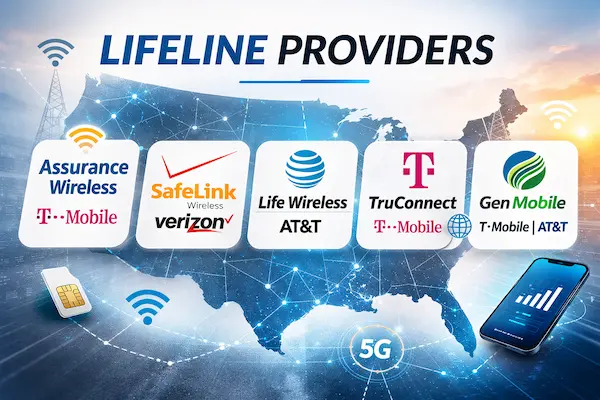
This is where people start searching brand-specific terms like Assurance Wireless Eligibility and SafeLink Wireless Eligibility.
Most of the time, what they really mean is, “Does this provider serve my area, and can I start service right after I’m approved?”
Here is the clean way to approach it.
First, you confirm approval through the National Verifier process.
Then, you choose a provider available in your state and enroll using your approval details or Application ID, following the provider’s onboarding steps.
- Assurance Wireless Eligibility: You still need National Verifier approval first, and then you enroll where Assurance is available.
- SafeLink Wireless Eligibility: Same principle, because the provider enrollment step follows eligibility verification.
This approach helps you avoid submitting multiple applications across multiple providers before you are verified, which can create confusion and delays.
Lifeline benefits program details that people confuse with ACP
The Lifeline benefits program is a monthly discount that helps reduce the cost of phone or internet service for eligible households.
You may also see older searches like Free Phone ACP Lifeline, because people used ACP and Lifeline together in the past when ACP was active.
However, ACP ended after funding ran out, so you should treat “ACP” references as historical unless official updates state otherwise.
What matters for you right now is this.
Focus your plan on what Lifeline provides today, and verify current offers through official portals and the provider you choose.
That keeps you grounded in real, current eligibility rules instead of outdated internet advice.
Lifeline eligibility quick checklist you can follow today
If you want a simple checklist that keeps you fast and organized, use this before you apply.
It aligns with how the National Verifier process is designed to confirm you.
It also reduces the chance you get stopped for a fixable mismatch.
- Choose your path: program-based or income-based, and commit to the strongest one.
- Confirm your household: remember the one-per-household rule, and prepare the Household Worksheet only if instructed.
- Get your details exact: full legal name, date of birth, and consistent address formatting.
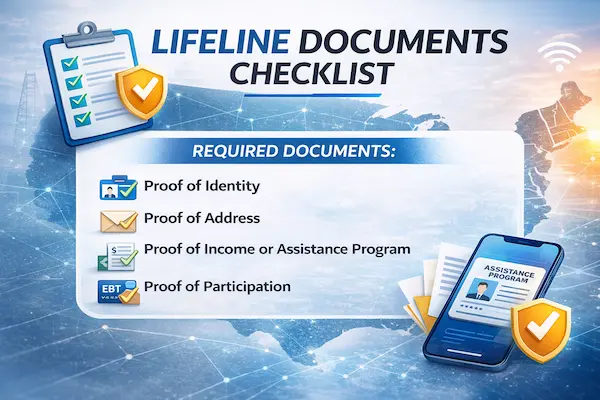
- Prepare proof: benefits letter or portal evidence for programs, or tax return and income documents for income qualification.
- Apply through official portals: GetInternet.gov or LifelineSupport.org for the fastest guided steps.
- Enroll after approval: then pick a provider and activate service using your verified status.
When you follow this order, you stop feeling like you are guessing.
You start feeling like you are executing a process that was designed to get you to a clear yes-or-no decision.
That confidence is exactly what makes the difference between “I tried” and “I’m enrolled.”