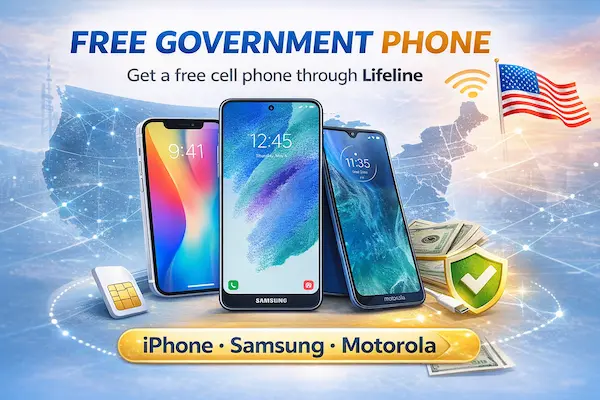
A free government phone through Lifeline is real, and you may already qualify.
If your phone bill feels heavy every month, this benefit was built for you.
Keep reading to see who qualifies, what you get, and which provider fits you.
What the free government phone through Lifeline is
The free government phone comes from Lifeline, a federal program that helps low income households pay for phone service. It gives qualifying people up to 9.25 dollars a month off their bill, which is often enough to bring the cost down to zero.
The program started in 1985 and is run by two federal bodies. The FCC (the agency that oversees phones and internet) sets the rules, and the USAC (the group that manages the money) handles the day to day. The funding does not come from your taxes, it comes from a special fund built for this purpose.
Here is the part that confuses most people. The government pays for the service, not the phone. The free phone you hear about is a gift from the wireless company, added on to bring you in as a customer. That is why the phone you get changes from state to state and from one company to the next.
Since another benefit called the ACP ended in 2024, Lifeline became the main federal program for cheap phone and internet service. It is active in all 50 states, in every territory, and on Tribal lands.
Who can get a free government phone
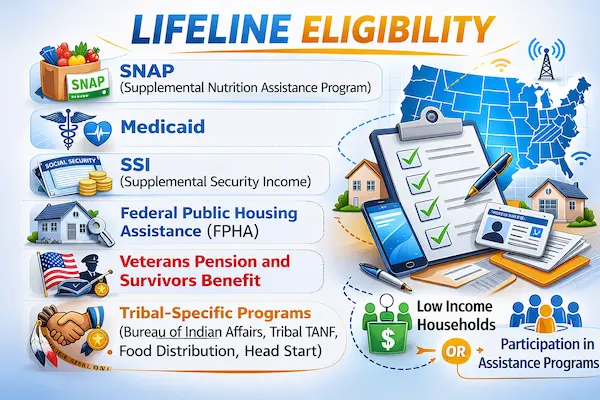
You can qualify in two ways, and you only need one of them. The first is by taking part in a government program. The second is by your income. If either one fits you, the benefit is yours to claim.
Qualifying through a government program
If you or anyone in your home takes part in one of these programs, your whole household qualifies. It does not matter which person is enrolled, one is enough for everyone at that address.
Qualifying through your income
Even if you are not in any program, you can still qualify by income. The rule is simple: your household must earn at or below 135 percent of the Federal Poverty Guidelines. The limit depends on how many people live in your home. The table below shows the yearly limits for 2026.
One rule ties this together: only one benefit per household is allowed. A household means everyone at the same address who shares money and bills. Alaska and Hawaii use higher numbers, and the limits update each January, so it is always smart to check the current figure before you rule yourself out.
How much the benefit is worth each month
The core benefit is up to 9.25 dollars a month off your service, and up to 34.25 dollars a month if you live on Tribal lands. For most qualifying people, that discount wipes out the whole bill on a Lifeline plan.
But the real value is bigger than the number. Once the discount is applied, providers build free plans around it. That means you are not just saving a few dollars, you are often getting a full plan with unlimited talk, unlimited text, and monthly data at no cost at all.
Remember the one benefit per household rule. You can use it for a phone or for home internet, but not both at the same time. Most people choose the phone, since it travels with them and covers calls, texts, and data in one device.
To picture the savings, think about what a similar prepaid plan costs on the open market. Many run between 30 and 50 dollars a month. Over a year, that is 360 to 600 dollars staying in your pocket instead of leaving it.
Which providers offer a free phone
Several FCC approved companies deliver the Lifeline benefit, and each one offers a different phone. The phone you get depends on your ZIP code and the stock the company has when you apply. Most ship a basic Android, and a few offer nicer devices.
Providers that usually ship an Android
Most Lifeline companies send a basic but working Android smartphone to new customers. It handles calls, texts, apps, and browsing without any trouble. Assurance, Life Wireless, Gen Mobile, and TruConnect all fall into this group, and any of them is a safe pick for a reliable everyday phone.
The network behind each company matters most. If T-Mobile is strong where you live, an Assurance or TruConnect phone will serve you well. If you are in a rural area, SafeLink on the Verizon network often reaches farther and holds a signal better.
The provider most likely to offer an iPhone
If you are hoping for a name brand phone, AirTalk Wireless is the one to watch. It offers Apple and Samsung devices more often than any other Lifeline company, and it recently absorbed Cintex Wireless, so some Cintex applications now route through AirTalk.
Be realistic about the models. The free iPhones tend to be older ones like the 7, 8, or SE, and they depend on ZIP code and stock. Newer flagship iPhones are rarely free. If you already own a phone you like, AirTalk and others let you bring your own device, as long as it is unlocked and compatible.
What you actually get with the plan
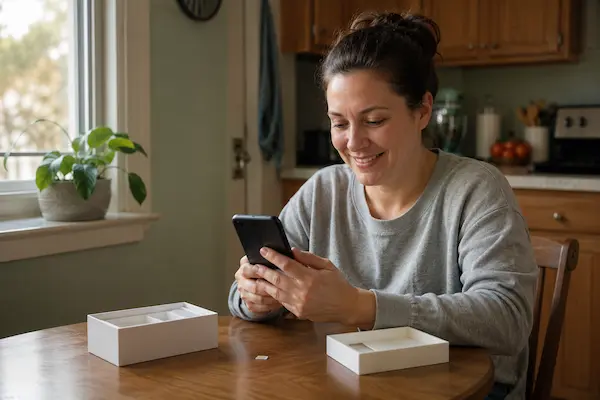
The Lifeline benefit is not a one time gift. It is service that renews every month for as long as you stay eligible. The typical plan is more generous than people expect, and it costs nothing out of pocket.
Most qualifying customers receive unlimited talk and text, so you never ration calls or messages. On top of that comes a monthly bucket of high speed data, usually somewhere between 5 and 25 gigabytes depending on your state and provider. That is enough for job applications, video calls with the doctor, browsing, and a fair amount of streaming.
Some providers add extras worth noting. A few include mobile hotspot, letting you connect a laptop or tablet through your phone. AirTalk adds international calling to more than 200 countries, which helps families spread across borders. Across the board, Lifeline only plans carry no activation fee and no monthly charge.
Is the free government phone worth it
For anyone already on SNAP, Medicaid, or SSI, the answer is a clear yes. This is a real benefit you are entitled to, and skipping it means leaving free service and a free phone on the table. Yet only about one in five eligible households actually claims it.
Some people hold back because a free phone sounds too good to be true. That instinct is healthy, but Lifeline is a genuine federal program with rules on public record. Others confuse it with the ACP that ended in 2024 and assume all phone help is gone. It is not, Lifeline is very much alive and funded.
There is also a timing angle. Because the phones come from providers with limited stock, the nicer devices move fast and on a first come first served basis. Waiting rarely gives you better options, and often gives you fewer. If you qualify today, acting today gets you the widest choice and starts the savings sooner.
ℹ️ Important: This content is independent and informational only. We are not affiliated with, sponsored by, or in control of any program or provider mentioned. Always check official channels for current rules and eligibility.
The bottom line is simple. The free government phone through Lifeline is real, federal, and free for people who qualify, and qualifying is easier than most assume. If you already use a qualifying program or your income fits the limits above, the benefit is likely yours for the asking.
The next move is to check your eligibility and then choose a provider that serves your state. Once you know you qualify, the step by step signup is quick, and free monthly service can be yours in a matter of days.