Reduce Work Stress: Practical Strategies for Employees and Managers
Advertisements
You can be good at your job and still feel overwhelmed.
If your mind is always “on,” your body eventually pays the bill.
This guide will help you reduce work stress with realistic routines, workplace-friendly habits, and team-level strategies that actually stick.
You will get quick relief ideas, longer-term prevention, and simple ways to create a healthier work rhythm without losing performance.
How to reduce work stress at work: start with a simple 15-minute setup
If you want to reduce work stress, start by making your day easier to navigate.
Stress grows when priorities are unclear and interruptions control your time.
This first step is like “enrolling” in a calmer workday.
You are not signing up for a program, you are building a system that supports you every day.
Who this approach works for
- Anyone searching stress management for employees who wants practical steps, not motivational posters.
- Professionals dealing with constant messages and shifting priorities.
- Managers who want a healthier team without lowering standards.
- People who feel close to burnout and need a calmer rhythm fast.
Step-by-step: your 15-minute “calm control” reset
- Write your top three outcomes for today in one sentence each.
- Choose one “must-do” task that makes everything else easier.
- Block 25 to 45 minutes for focused work, with notifications off.
- Add one buffer block for surprises, because surprises always happen.
- Decide your message windows, like late morning and late afternoon.
This small setup is a powerful form of stress reduction at work because it reduces uncertainty.
Uncertainty is one of the fastest ways stress multiplies during the day.
Quick ways to reduce work stress when your day is already intense
Sometimes you do not need a new strategy.
You need a fast reset that interrupts the stress cycle before it escalates.
These quick credit-sized resets are not “magic.”
They are small nervous system breaks that can help you feel steadier and respond more thoughtfully.
Best ways to relieve stress at work in under five minutes
- Stand up and relax your shoulders while taking five slow breaths.
- Do a 60-second walk to a window, hallway, or water fountain.
- Name the stressor in one sentence, then name the next step in one sentence.
- Switch to a “single-tab” rule for 10 minutes to stop mental multitasking.
These are stress relieving activities at work because they create a pause between trigger and reaction.
That pause is often the difference between a messy day and a manageable one.
Stress reducing activities at work that actually fit real workplaces
A lot of “wellness tips” fail because they ignore reality.
Reality includes meetings, deadlines, customers, and coworkers who need things from you.
The goal is to choose activities to reduce stress at work that are discreet, fast, and repeatable.
Repeatable always beats dramatic when you want long-term change.
Practical activities to reduce stress at work during the day
- A two-minute stretch break after a meeting, even if you do it beside your chair.
- A “reset walk” while you listen to a call where you are not speaking much.
- A short hydration cue, like sipping water after every calendar event.
- A quiet desk tidy that takes 90 seconds and removes visual clutter.
A simple “stress-lowering” micro-routine you can repeat
- Stop and breathe for 20 seconds, slowly and intentionally.
- Drop your shoulders and unclench your jaw.
- Ask, “What is the next most useful thing I can do.”
- Do that next step for three minutes, no multitasking allowed.
These stress reducing activities at work work because they are small enough to survive busy days.
Small enough to do is big enough to matter over time.
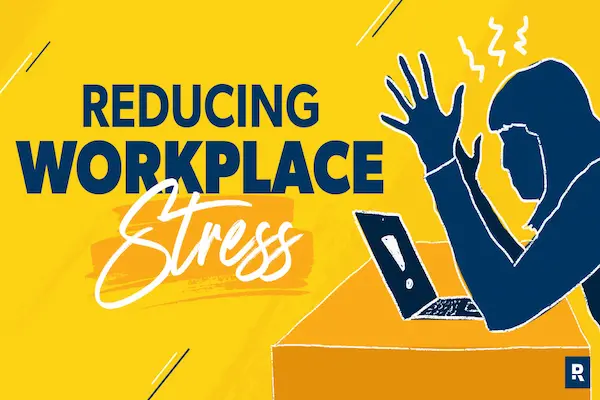
Dealing with stress and anxiety at work without losing performance
Stress and anxiety at work often feel like a hidden background noise.
You can still “get things done,” but everything feels heavier than it should.
This section is about dealing with stress and anxiety at work with supportive habits, not self-criticism.
You are not broken, your system just needs support.
When anxiety spikes, use the “name and narrow” method
- Name what you are feeling in simple words, like “I feel pressure” or “I feel behind.”
- Narrow your focus to one next step you can finish in 10 to 20 minutes.
- Start immediately, then reassess after you have momentum.
Supportive habits that reduce mental overload
- Batch your messages into time windows so your brain gets uninterrupted time.
- Turn vague tasks into clear next steps, so starting feels easier.
- Use short checklists for repeat work, so you stop rethinking the same process.
If anxiety is persistent, intense, or affecting daily functioning, professional support can be very helpful.
This content is educational, and it cannot replace individualized care.
Overcome stress at work by controlling your inputs
Most workplace stress comes from inputs you did not choose.
Requests, messages, meetings, and urgent “quick questions” can turn your day into reaction mode.
If you want to overcome stress at work, create small boundaries that protect focus and reduce constant switching.
This is one of the most underrated forms of stress reduction at work.
Three input boundaries that feel professional
- Set a status like “Heads-down until 11:00, then I will respond.”
- Ask for requests in writing so you can triage them thoughtfully.
- Use a “two-check” inbox rule, like late morning and late afternoon.
One script that saves time and stress
Try saying, “I can do this by Friday, or I can do that by Wednesday, which matters more.”
That sentence turns chaos into priorities without sounding defensive.
Overcoming stress in the workplace often starts with clearer choices, not more effort.
Clear choices protect your energy and your results.
Work life balance and stress management: build a boundary you can keep
Work life balance and stress management are connected, whether you notice it or not.
When work leaks into every hour, your recovery disappears, and stress accumulates quietly.
Work life balance stress management is not about doing less.
It is about recovering enough to do your work with a clearer mind.
Three boundaries that protect recovery
- Create a shutdown ritual, like writing tomorrow’s first step and closing your tabs.
- Set a “last message” time window most days, even if it shifts occasionally.
- Protect one non-work activity that restores you, like walking, reading, or time with friends.
A realistic “after work” reset in 8 minutes
- Write down anything still on your mind, so it stops looping.
- Choose one priority for tomorrow and note the first step.
- Do a short transition action, like a walk, shower, or stretching.
This is not perfection, it is protection.
And protection is how you reduce work stress over weeks, not just hours.
Reducing burnout in the workplace: early signs and smart prevention
Reducing burnout in the workplace starts with noticing patterns early.
Burnout is not only exhaustion, it is also cynicism, detachment, and reduced effectiveness over time.
You do not need to wait for a breakdown to take action.
You can make small changes that reduce strain and improve recovery.
Early signs your system needs support
- You feel tired even after rest, most days.
- Small tasks feel unusually heavy or irritating.
- You struggle to focus, even on important work.
- You feel disconnected from work you used to handle well.
Prevention steps that help before burnout grows
- Reduce multitasking by limiting “in progress” tasks to one or two at a time.
- Add buffers between meetings when possible to reduce cognitive strain.
- Ask for priority decisions when everything is labeled urgent.
- Take real breaks, not “scroll breaks,” so your brain actually recovers.
If you are already deep in exhaustion, consider speaking with a qualified healthcare professional or mental health professional.
Support is not weakness, it is strategy.
Corporate stress management that actually helps employees
Corporate stress management works best when it reduces friction in the environment.
If the culture rewards overwork, wellness posters will not change outcomes.
The best workplace approach combines personal skills with structural support.
That includes workload clarity, realistic timelines, and psychological safety.
Manager moves that reduce stress without lowering standards
- Define the top three priorities for the week, and explain what is not priority.
- Normalize asking for clarity when deadlines shift.
- Reduce unnecessary meetings and protect focus time as a team norm.
- Encourage breaks by modeling breaks, because culture follows behavior.
This is corporate stress management that employees actually feel.
It shows up as fewer emergencies, cleaner expectations, and calmer execution.
Stress management programs in the workplace: what to include
Stress management programs in the workplace do not need to be complicated to be effective.
They need to be practical, consistent, and easy to join without stigma.
Stress reduction programs in the workplace work best when they offer multiple entry points.
Some people want quick activities, while others want coaching, training, or deeper support.
Elements of a practical program
- Short training on focus, boundaries, and workload prioritization.
- Optional group sessions for stress reduction at work skills and discussion.
- Clear manager guidance on workload, timelines, and meeting hygiene.
- Access to professional support pathways when needed, such as EAP resources if available.
Simple metrics that show if it is working
- Fewer last-minute emergencies and fewer repeated “fire drills.”
- Improved clarity in priorities and fewer conflicting requests.
- Better meeting quality and more protected focus time.
A program succeeds when people actually use it.
That means making participation easy, optional, and respected.
Managing stress at workplace PDF: how to create a simple one-page resource
Many teams search managing stress at workplace pdf because they want something shareable and clear.
A one-page resource can be surprisingly powerful when it is specific and practical.
You do not need a 40-page handbook to reduce work stress.
You need a one-page guide that reminds people what to do in the moment.
What to include in your one-page “PDF” guide
- Three quick stress relieving activities at work that take under two minutes.<